
Century old farm faces uncertain future
This post was originally published on this site.


Indus, Alta. (Rural Roots Canada) — With Calgary’s urban expansion closing in and no next generation to take over, a family farm established in 1912 may soon reach the end of its legacy.
Six years ago, Tanya Catonio and her husband, Tom Thompson, moved on to her grandparents’ farm on the outskirts of Calgary after her father’s passing, with the intention of keeping the farm’s heritage alive.
“Losing my dad just connected me even further to the land and to the amount of work and sacrifice my family put in to maintain this place,” says Catonio.
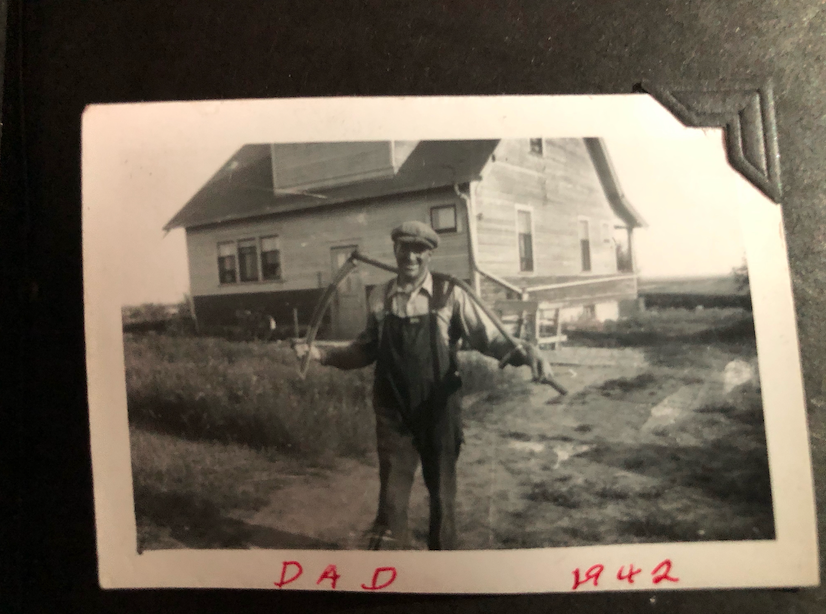
Catonio’s grandparents broke ground and built their house in 1912, becoming one of the founding families of Indus. The farm has remained in the family ever since.

“It’s a huge honour to be connected to a piece of property that way,” she says.
The land holds deep childhood memories for Catonio — especially those involving her grandmother. She remembers the smell of fresh bread baking in the kitchen, trips into town with her grandparents and long days helping in the vegetable garden.
For Thompson, the property appeal lies in the wildlife that still passes through. He is grateful that he gets to share the experience of being on Catonio’s family farm with her.
Catonio agrees, saying she enjoys having a property where wildlife still shows up, not yet pushed out by the expanding city.
“It’s such an honour to be connected cyclically throughout the seasons to one piece of property that stays constant,” she says, referencing the same hawks, owls and other animals that come back every season. She describes these returning creatures as lifelong friends.
READ MORE: Calgary Business Preserves 70 Years of Farming History
She also finds beauty in the permanency of their property. As well as in the small things, such as the towering a hundred-year-old trees on the property, which she refers to as her “childhood trees”. The same ones she would talk to and imagine fairy friends living in, years ago.
Despite that personal connection to the land, the reality of the farm is difficult.
Catonio says that the remaining 70 acres are no longer enough to support a viable farming income in the current economy. Both she and Thompson work full-time jobs while maintaining the property.

While her husband is working in northern Canada for two weeks at a time, Catonio manages the farm and its responsibilities on her own, which can be a challenge.
“If something is going to go wrong in the winter, it’s when he’s gone,” she says.
She recalls a time, a few years ago, when the power went out while she was caring for a hypothermic calf. With limited resources, it seemed like an impossible task to get it warm. She ended up covering the calf with an Old Navy jacket for days — and it survived.
The way this couple met was unique. They first connected when Catonio’s teenage daughter began dating Thompson’s teenage son. What began as a concerned mother trying to keep an eye on her daughter ended in a big misunderstanding when Catonio accidentally liked one of the boy’s posts. In it, he was wearing a “like if you think I am hot and sexy” t-shirt. She accidentally liked multiple times.
Catonio made a panicked call to Thompson, quickly trying to explain her mistake.
“I laughed at her,” says Thompson, recalling his reaction to their first phone call.
The misunderstanding eventually led to a connection. The two began chaperoning dates, and their relationship grew, even after their children’s relationship ended.

Together they now have seven children — three from Catonio and four from Thompson.
“None of them really have an interest in the farm,” says Thompson, though he remains hopeful that could change, or of the possibility of someone local wanting to do something of substance with the farm.
“Farming is not their future path,” adds Catonio.
That hard reality, along with the increasing developmental pressures, has forced the couple to think about the farm’s future.
In 2026, they were approached by a local developer who offered to buy the land and convert it into industrial property. This offer was declined.
Catonio says it’s not what they want for their land, and they’re holding the line, even as the City of Calgary pushes closer.
An industrial complex is being built across the road from their farm, and Calgary’s city limits are just minutes away. Catonio believes that further development in Indus is impossible to avoid. The landscape will quickly change, and the agricultural land will continue to disappear.
“Little by little, you’ll see small farms going up for sale,” says Catonio
She worries that as more farmland goes up for sale, it will be bought out by developers, leading communities to close in, and the remaining agricultural space will shrink, eventually pushing the farmers out altogether.
She says the thought of being the last ones to enjoy everything the farm has to offer is heartwrenching.
“If we are being honest, we are probably the last generation on this farm, and that’s a sad fact,” says Catonio.
photo credit: courtesy of Tanya Catonio and Tom Thompson
The post Century old farm faces uncertain future first appeared on Rural Roots Canada.